If there is one technique that separates average home cooking from restaurant-quality moments, it is brining. Whether you are looking to maximize Health by cooking delicious meals at home or sharing Love through food, mastering the wet brine is a great technique to learn.
Today, we are diving deep into wet brining chicken thighs—the most forgiving and flavorful cut—and how to adapt this method for everything from wings to pork chops.
💧 Wet Brining vs. Dry Brining: Which is Better?
Before we get to the recipe, let’s settle the debate. Both methods introduce salt to the meat to denature proteins (keeping it tender) and retain moisture, but they serve different purposes.
| Feature | Wet Brining | Dry Brining (Salting) |
| Process | Submerging meat in salted water. | Rubbing salt directly on meat skin/surface. |
| Texture Result | Plump, juicy, slightly heavier. | Concentrated flavor, tighter texture. |
| Skin Quality | Can be rubbery if not dried well after. | Superior crispiness (Golden standard). |
| Best For | Lean meats that dry out fast (Turkey, Chicken Breast, Pork Loin). | Steaks, Roasts, Chicken with skin you want crispy. |
| Speed | Faster penetration. | Takes longer (often 12-24 hours). |
Use Wet Brining with chicken when moisture is your #1 priority or if you want to infuse flavors (like lemon, peppercorns, or herbs) deep into the meat.
🍗 The “5-Bok” Wet Brine for Chicken Thighs
This recipe is optimized for Bone-In, Skin-On Chicken Thighs, but read on for modifications.
Equipment You Need
- Large Stock Pot or Brining Bucket: You need a non-reactive container (glass, plastic, or stainless steel). Avoid aluminum.
- Whisk
- Measuring Cup
Ingredients
- Water: 4 Cups (divided)
- Kosher Salt: 1/4 Cup (If using Table Salt, reduce to 2.5 tbsp)
- Sugar: 2 tbsp (Optional) (Brown sugar works best for color)(I usually skip the sugar)
- Aromatics (Optional but recommended): 2 cloves smashed garlic, 1 tsp black peppercorns, 1 bay leaf, onion, citrus sliced into rounds
Instructions
- Dissolve: In a saucepan, combine 1 cup of water with the salt, sugar, and aromatics. Heat gently until dissolved.
- Cool: Remove from heat and add the remaining 3 cups of ice-cold water. Crucial Tip: The brine must be completely cold before adding raw chicken to prevent bacterial growth.
- Submerge: Place your chicken thighs in your container and pour the brine over them. Ensure they are fully submerged (use a heavy plate to weigh them down if necessary).
- Wait: Refrigerate for 4 to 6 hours.
- Rinse & Dry: Remove chicken, rinse thoroughly with cold water to remove excess surface salt, and pat bone-dry with paper towels before cooking.
T-Nice Tip: If you want crispy skin after a wet brine, let the chicken sit uncovered in the fridge for 1 hour after drying it. This helps the skin dehydrate slightly.
Today, I had a 5.5 lbs Value Pack of Chicken Thighs. In the Instant Pot I melted 1/4 cup of Morton’s Kosher Salt in a cup of boiling water (from my quick boil kettle), added lemon slices, garlic, onion, and spices from the rack. After a few minutes to infuse, cooled down the water with 2 cups of ice. Filled with filtered water up to the 6 cup line on the Instant Pot. Added the 5.5lbs of chicken and the volume was perfect. Covered and refrigerated for 3 hours.
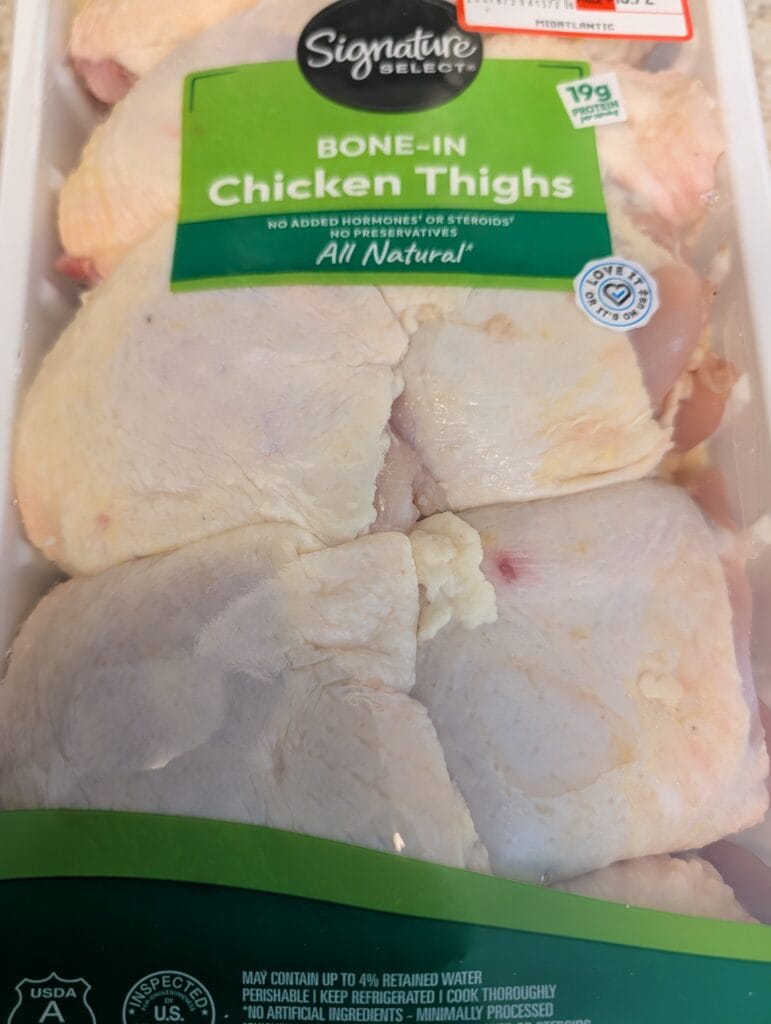
Some supermarkets will brine chicken (often called “plumping” or “enhancing”).
Signs of PreBrining:
- “Contains up to 15% of a solution.”
- “Enhanced with chicken broth, sea salt, and water.”
- “Self-basting.”
- “Injectable marinade.”
Okay to Brine:
- “Air Chilled” (This is the gold standard; it means no water was added during cooling).
- “No retained water.”
- “Ingredients: Chicken” (and nothing else).
- “No Salt Added”
Rinsed the brined meat but didn’t need to dry because the chicken was going to be braised in the Instant Pot. Added some fresh spices and a cup of water.
Tossed a few skin up in the air fryer for crispy, juicy tender awesomeness. Used the rest for chicken soup.
15 Minutes High Pressure in the Instant Pot
Collagen Breakdown: Bone-in thighs are high in connective tissue. This needs sustained heat to break down into gelatin (which heals the gut lining). we want to minimize Advanced Glycation End-products (AGEs)—inflammatory compounds formed when meat is cooked at high heat for dry periods.
Pressure Cooking: This is the gold standard for reducing AGEs because it uses moist heat and a contained environment. 15 minutes is short enough to preserve heat-sensitive vitamins (like B-vitamins) but effective enough to make the amino acids bioavailable.
⏱️ Modifications for Other Cuts
Chicken thighs are forgiving, but other cuts require strict timing to avoid becoming too salty or mushy.
- Chicken Wings: * Time: 1.5 to 2 hours. Do not over-brine wings or they will taste like seawater.
- Chicken Breasts (Boneless/Skinless):
- Time: 30 minutes to 1 hour. Breasts are like sponges; they absorb brine very fast.
- Whole Chicken:
- Time: 12 to 24 hours. You will need to double or triple the brine volume. This is the secret to the perfect Sunday roast.
🥩 Applicability to Pork, Beef, and Other Meats
Can you use this brine on other meats? Absolutely.
Pork (The Best Candidate)
Pork chops and pork loins benefit from wet brining even more than chicken. Because modern pork is very lean, a 2-4 hour wet brine guarantees a juicy chop every time. Add apple cider vinegar to the brine for an extra kick.
Beef (Proceed with Caution)
Generally, Dry Brining is preferred for beef (steaks, briskets, ribs). Wet brining beef can dilute the rich, iron-heavy flavor of the meat and prevent a good sear (the Maillard reaction). But exceptions such as Corned Beef or Pastrami or Korean Short Ribs, use specific curing brine or marinades to demonstrate beyond a doubt that wet brining can help certain cuts and dishes become tender and flavorful.
Fish
Fish requires a much weaker brine (about half the salt) for a very short time (15-20 minutes). This helps firm up the flesh of white fish like Cod or Halibut.
🛒 Shop the Gear
Support 5-Bok by using the links below for T-Nice’s favorite kitchen tools.
May your meals bring you Health and Happiness.



0 Comments